How to read a care label — and the part of it that isn't required by law
3 July 2026 · 5 min read · Kleerdrobe
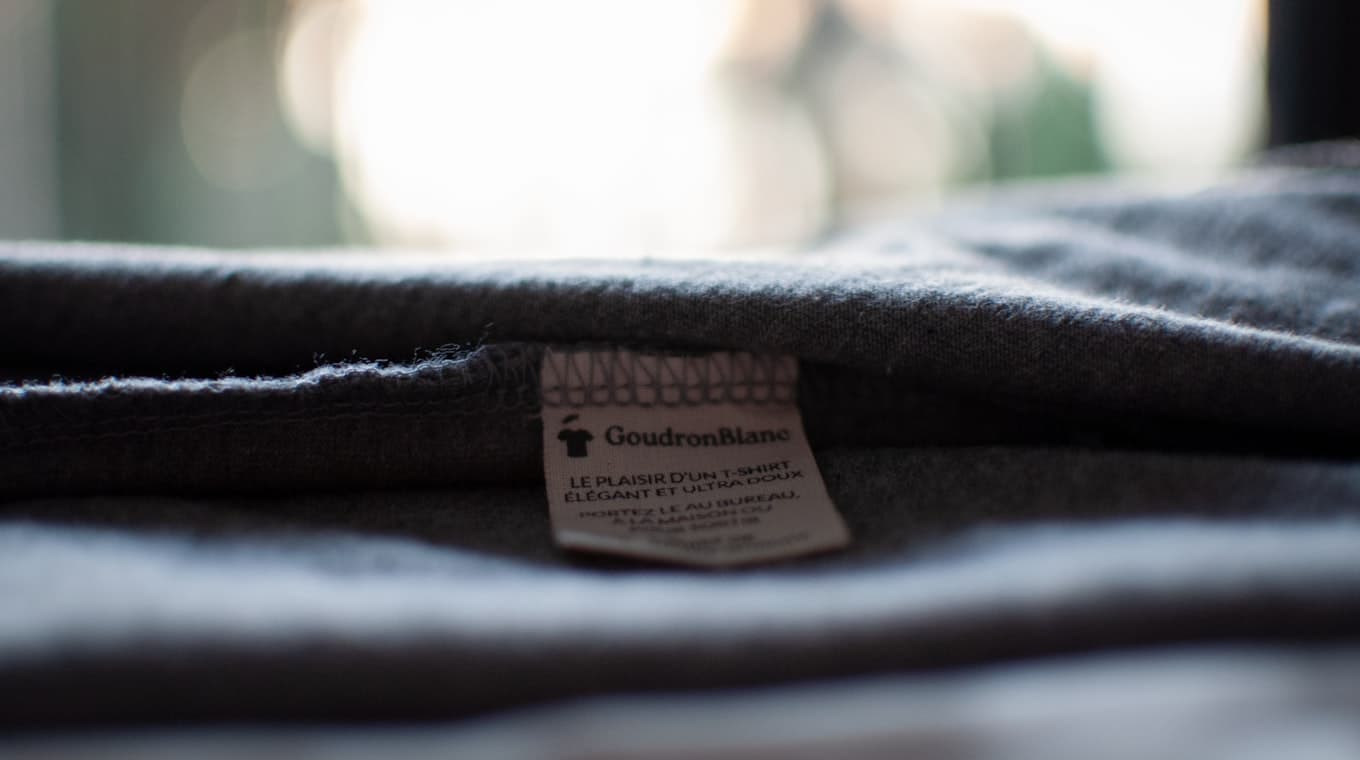
There is a small piece of fabric sewn into the side seam of almost everything you own, and most people have never read one properly. It is the single most useful thing a garment tells you about itself, and it is written in a language nobody teaches.
Here is how to read it — and one thing about it that surprises almost everyone.
The care symbols are not legally required. The fibre content is.
In the EU, Regulation 1007/2011 makes one thing mandatory on a textile label: the fibre composition, by percentage, in descending order. That is the law. “60% katoen, 40% polyester” has to be there.
The washing symbols do not have to be. They are a voluntary system, and the symbols themselves are trademarks held by GINETEX, standardised as ISO 3758. A brand includes them because it is useful and expected, not because anyone compels it.
This matters more than it sounds. It means the composition is the part you can rely on and compare across brands, and the care instructions are the manufacturer’s opinion — a conservative one, usually, because the cost to them of a garment ruined by over-washing is a complaint, and the cost of you washing it too gently is nothing.
Five symbols, in a fixed order
Every care label uses the same five shapes, always in the same sequence. Once you know the shapes, the dots and bars do the rest.
The washtubis washing. The number inside is the maximum temperature in Celsius; on some labels it is dots instead, where one dot is 30 °C and each additional dot adds roughly ten degrees. A single bar underneath means reduced mechanical action — the synthetics cycle, less spinning. Two bars means much gentler still, which is what you will find on wool. A hand in the tub means hand wash only. A cross through the whole symbol means do not wash in water at all.
The triangle is bleaching. Empty means any bleach is permitted. Two diagonal lines inside means oxygen bleach only, never chlorine. Crossed out means none.
The square is drying. A circle inside it means tumble drying is allowed, and the dots are heat: one dot low, two dots normal. Crossed out means keep it out of the dryer. A square with a horizontal line means dry flat — this is the one that matters for knitwear, because hanging a wet jumper stretches it permanently under its own weight.
The ironis ironing, and the dots are temperature: one dot is about 110 °C for synthetics, two is around 150 °C for wool and blends, three is roughly 200 °C for cotton and linen.
The circle is professional cleaning. A P or an F inside tells the cleaner which solvent to use. A W means professional wet cleaning. You do not need to decode these — the dry cleaner does. You only need to notice whether the circle is crossed out.
What the composition actually predicts
The fibre list is the part worth reading closely, because it predicts how a garment will age far better than the price does.
A single fibre at 100% is generally the easiest to look after and the easiest to repair. A pure wool jumper can be rewoven where it snags. A pure cotton shirt can be patched with matching cloth.
A blend of two fibres is usually a deliberate trade: polyester in cotton for crease resistance, elastane in denim for give. These are real benefits, and they come with a cost in longevity that nobody prints on the label.
Elastane is the one to watch. It is what makes jeans comfortable and what makes them baggy at the knee after eight months. It degrades with heat and time, and unlike a seam or a zip, degraded elastane cannot be repaired — the stretch is gone from the whole garment at once. If you want a pair of trousers to last a decade, the percentage of elastane is a better predictor than the brand.
Anything above three or four fibres in a blend usually signals a fabric engineered to a price rather than to a purpose.
The absent label
Sometimes the composition is missing, illegible, or has been cut out. Our own product data runs into this constantly: feeds arrive with compositions written as “60%KATOEN 40%POLYESTER”, as “Outer: 100% wool. Lining: 100% viscose”, and as nothing at all.
When we cannot read it, we say so rather than guessing. A missing fibre list is honest; an invented one is worse than useless, because you would make decisions on it. If you see “composition not given” on one of our pages, that is not an oversight — it is the retailer not having told us, stated plainly.
The one habit worth building
Read the label before you buy, not after you get home. It takes four seconds and it tells you two things the product page often will not: what the garment is actually made of, and how much work it is going to be.
A jumper that says “hand wash, dry flat” is not a worse jumper. But if you know you will never hand wash anything, it is a worse jumper for you, and the label told you so before you paid.